
When Donald Trump assumed office as President of the United States, the world witnessed a series of bold and often controversial aspirations. One of them stood out for sounding bizarre, confusing, yet audacious: the complete acquisition of Greenland. At the time, it was widely dismissed as another impulsive rant. Few believed it was a serious geopolitical proposition.
Recent developments, however, suggest otherwise.
As global power dynamics intensify, Greenland has moved from the margins of geography textbooks and climate discussions to the centre of strategic interest. Once seen merely as an ice-capped landmass between two continents, Greenland is now being viewed through the lens of national security and economic dominance.
With a population of just 56,000, Greenland has become a focal point for global attention. According to Forbes, Tech leaders and investors including figures like Bill Gates, Jeff Bezos, and Sam Altman are channeling significant investments into the region along with companies such as Palantir exploring the idea of building a freedom city in Greenland. The reason is clear: rare earth minerals.
These minerals are critical for manufacturing semiconductors, which power AI systems, advanced defence technologies, and future digital infrastructure. In the global race for AI supremacy, securing access to rare earth resources has become a strategic imperative.
But amid the escalating discourse on artificial intelligence, technological dominance, and mineral security, I see the mass a little differently.
Instead of rushing to develop Greenland, why not focus on protecting and amplifying what the world continues to ignore?
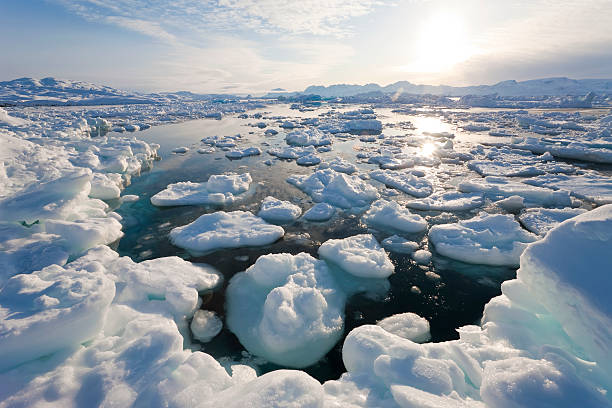
A landmass covered by nearly 80% ice, Greenland should be at the very centre of global climate conversations. Its rapidly melting ice sheets are not just a regional concern they are a warning signal for rising sea levels worldwide, posing a massive threat stretching from Western Europe to Oceania.
The crisis is already real. Small island nations are digitally mapping their cities not for innovation, but for memory, preparing for a future where their land may no longer exist.
Beyond minerals and military strategy, Greenland holds immense potential to redirect global attention toward water security, climate resilience, and planetary survival. In a warming world, its ice is not just frozen water, it is data, warning, and responsibility.
If the 21st century is about safeguarding the future, Greenland should be treated not as a resource to extract, but as a climate sentinel the world cannot afford to ignore.
I’d love to hear your thoughts. If you care deeply about the future of our planet and the choices we make today, let’s start an honest, meaningful conversation.
About the Author

Impact & CSR professional working at the intersection of climate, skill development, and social innovation. With experience in impact research, policy-aligned CSR strategies, and workforce development, Navya writes on how global power shifts, technology, and climate action shape our collective future.
🔗 LinkedIn | 📧 Email: navya.naveli@impactsapiens.com